
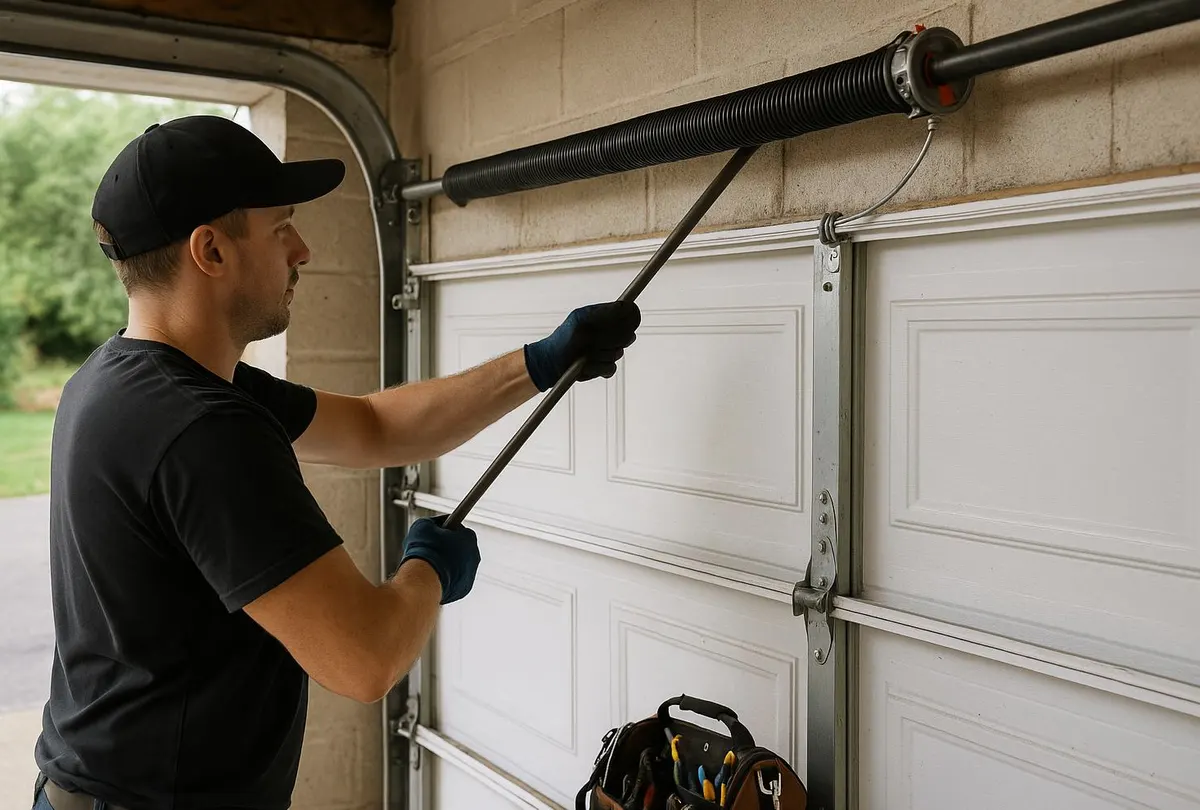
A Typical Service Call
On most off-track calls in this area, the homeowner describes the same sequence: the door was working fine, then it started grinding on one side, then it stopped closing all the way. By the time a technician arrives, there's usually a visible gap between the rollers and the track on one side, sometimes with a dent or outward bow in the rail itself. The door still has power, the opener still runs, but the carriage is fighting the track instead of gliding through it. That mismatch between a working opener and a struggling door is the first clue that the tracks, not the motor, are the problem.
Symptoms That Point to Track Trouble
- Grinding or scraping noise as the door travels, especially near the top or bottom of its run.
- Jerking or hesitation partway through opening or closing, even though the opener motor sounds normal.
- A visible gap between one or more rollers and the track, often widest on the side nearest a dent or impact point.
- The door hangs crooked when open, or one corner sits lower than the other when closed.
- Panels rubbing against the frame or weatherstripping that didn't used to make contact.
- The door won't fully seal at the bottom, leaving a gap that lets in rain or humidity during afternoon downpours.
Any one of these on its own might be minor. Several together usually mean the track has shifted enough to change how the rollers sit inside it.
Causes, Checked in the Order a Technician Looks
1. Impact Damage
This is the first thing a technician rules out because it's the most common and the easiest to spot. A car bumper, a bike handlebar, a ladder, or even a misjudged delivery cart can tap the bottom section of track and bend it inward or outward. The dent is often small, but it's enough to catch a roller every time the door passes that point.
2. Loose or Rusted Mounting Brackets
Tracks are held to the framing with brackets and lag screws. In homes near the coast, salt air speeds up rust on these fasteners, and the constant humidity swings here loosen screws set into wood that expands and contracts with moisture. A technician checks every bracket along both tracks, looking for play, rust streaks, or screws that spin without biting.
3. Worn or Cracked Rollers
Rollers that are flat-spotted, cracked, or missing their bearings don't travel smoothly, and they put uneven side-pressure on the track every cycle. Over months, that pressure can bow a track outward even without any single impact. The technician checks roller condition before assuming the track itself is at fault, since replacing rollers sometimes fixes what looks like a bent track.
4. Frame Swelling and Shifting
South Florida's humidity and heat cause wood door frames to swell during wet months and shrink back in drier stretches. That movement can pull a bracket slightly out of plane or tilt a track a few degrees off vertical. It's subtle, but enough to make a door bind on one side. A technician checks whether the opening itself is still square before blaming the hardware.
5. Wind Load During Storms
Garage doors in this region are built with wind-load requirements in mind, but a hard gust during hurricane season can still flex a door and its tracks, particularly on an older door or one with worn reinforcement. After any significant storm, a technician checks for subtle bowing along the vertical tracks that might not be obvious from the garage floor.
6. Long-Term House Settling
In older homes, slow foundation settling can shift the garage opening out of true over years. This is the least common cause but the hardest to miss once ruled in, because it means the track position needs to be reset relative to a frame that has moved, not just straightened back to its original line.
How Each Fix Is Done
- Minor bends: Straightened in place with a mallet and alignment tool, then brackets are re-torqued and rollers checked for free movement.
- Moderate damage: The damaged section of track is cut out and replaced, matched to the existing rail so the door doesn't need full new hardware.
- Severe bends or rust-through: Full track replacement on the affected side, often paired with new rollers and upgraded galvanized brackets to hold up better against salt air.
- Frame-related misalignment: Brackets are reset and, if needed, backed into solid framing with longer lag screws so future humidity swings don't loosen them again.
When to Call Pinecrest Garage Door Pro
If your door is grinding, hesitating, or hanging crooked, it's worth having it looked at before the rollers or opener take on extra strain from fighting a bad track. Pinecrest Garage Door Pro handles Off Track Door Repair for exactly these situations, straightening or replacing damaged rail sections and resetting brackets so the door runs true again. If it's been a while since anyone has checked the rollers, cables, and hardware, a Preventive Maintenance & Tune-Up visit catches small issues like a loosening bracket or a cracked roller before they turn into a bent track.
If your garage door is grinding, sticking, or hanging off to one side, call Pinecrest Garage Door Pro for a straightforward diagnosis and repair, right here in Pinecrest, FL.