
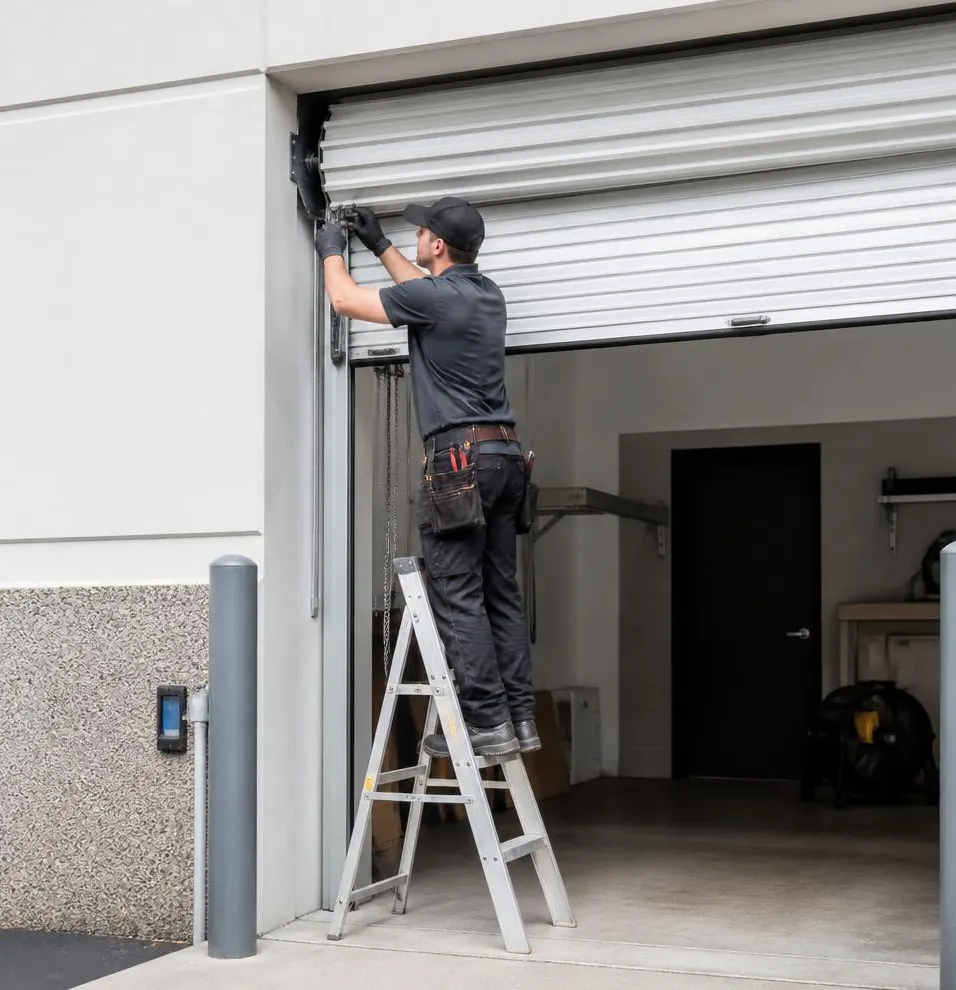
Short answer: your garage door is not a commercial door, and that's a good thing. Commercial and warehouse overhead doors are built around a completely different job — opening and closing dozens or hundreds of times a day, often automated, under different structural rules. A residential door is engineered for a handful of cycles a day and a totally different opener. Neither one is "better." They're built for different lives.
Why This Argument Even Comes Up
It usually starts with one of two things: someone saw a thick, heavy-gauge steel door at a warehouse and wondered why their own door feels flimsy by comparison, or someone wants a bigger, beefier door for a workshop or RV bay and assumes "commercial" automatically means "stronger, so better." Both are reasonable instincts — they're just comparing two products that were never meant to do the same job.
What Actually Separates Commercial from Residential
Steel gauge and panel construction
Commercial overhead doors typically use heavier-gauge steel and simpler, flatter panel designs because they're built for durability under constant use, not curb appeal. Residential doors — steel, wood composite, or insulated sandwich panels — are designed to look good on a house and hold up to daily weather exposure, but they're not meant to take the kind of abuse a loading dock door takes.
Spring systems rated for far more cycles
This is the big one. A residential torsion spring is typically rated for somewhere in the 10,000-cycle range, which is plenty for a door that opens a few times a day for years. A commercial door at a business that opens 20, 50, or 100+ times daily needs a spring system rated for tens of thousands more cycles, or it will fail constantly. If you tried to run a residential spring setup like a commercial one, you'd be replacing springs every few months instead of every several years.
Opener horsepower and duty cycle
Residential openers are built for intermittent use — open, close, done. Commercial operators are built for continuous duty, higher torque, and often integrate with keypads, timers, or building access systems rather than a single remote on the visor. Putting a residential opener on a heavy, high-cycle commercial-style door is a fast way to burn out a motor.
Wind load and structural requirements
In South Florida, both residential and commercial doors have to meet wind-load engineering standards because of hurricane season — but the engineering behind a large warehouse door covering a bigger opening is a different calculation than a standard two-car residential door. Bigger spans mean different bracing, different track reinforcement, and different failure points if a door isn't rated correctly for the opening size and exposure.
What This Means for Maintenance
Because commercial doors cycle so much more often, they need maintenance on a tighter schedule — lubrication, hardware checks, and spring inspections happen monthly or quarterly in a lot of commercial settings, not once or twice a year. Residential doors don't need that frequency, but they're not maintenance-free either, especially here. Humidity and salt air accelerate rust on tracks, hinges, and springs, and the swelling and sticking that comes with moisture-soaked wood or composite panels is a real issue after a stretch of afternoon downpours. A residential door that's ignored for years will show the same kinds of problems a neglected commercial door shows — it just takes longer to get there.
The Residential Doors People Mistake for Commercial
A few situations make homeowners second-guess their own door:
- Oversized garage doors for RVs, boats, or multi-bay workshops, which use heavier panels and stronger springs than a standard door but are still residential-grade products.
- High-cycle smart openers that get used constantly by a family in and out all day, which can wear faster than the average residential duty cycle assumes.
- Heavy insulated doors chosen for energy efficiency, which feel and sound more substantial but aren't built to commercial cycle counts.
None of these need a commercial door. They need a residential system sized and maintained correctly for how hard they're actually being used.
When to Call Pinecrest Garage Door Pro
If your door feels like it's working too hard — slow to open, noisy, or needing more force than it used to — that's worth a look before a spring or cable gives out completely. Our Preventive Maintenance & Tune-Up service checks the things that fail first in our climate: spring tension, track alignment, hardware corrosion from salt air, and hinge wear from humidity swings. If you're dealing with a heavier-use door, an oversized bay, or springs that are clearly undersized for how often the door runs, our Garage Door Spring Repair team can right-size the system so it's not working beyond what it's built for.
If you're in Pinecrest, Palmetto Bay, Kendall, South Miami, Coral Gables, Cutler Bay, The Crossings, or Dadeland and your garage door just doesn't feel like it used to, call Pinecrest Garage Door Pro. We'll tell you straight whether it's a maintenance fix or something bigger — no upsell, just the right answer for your door.