
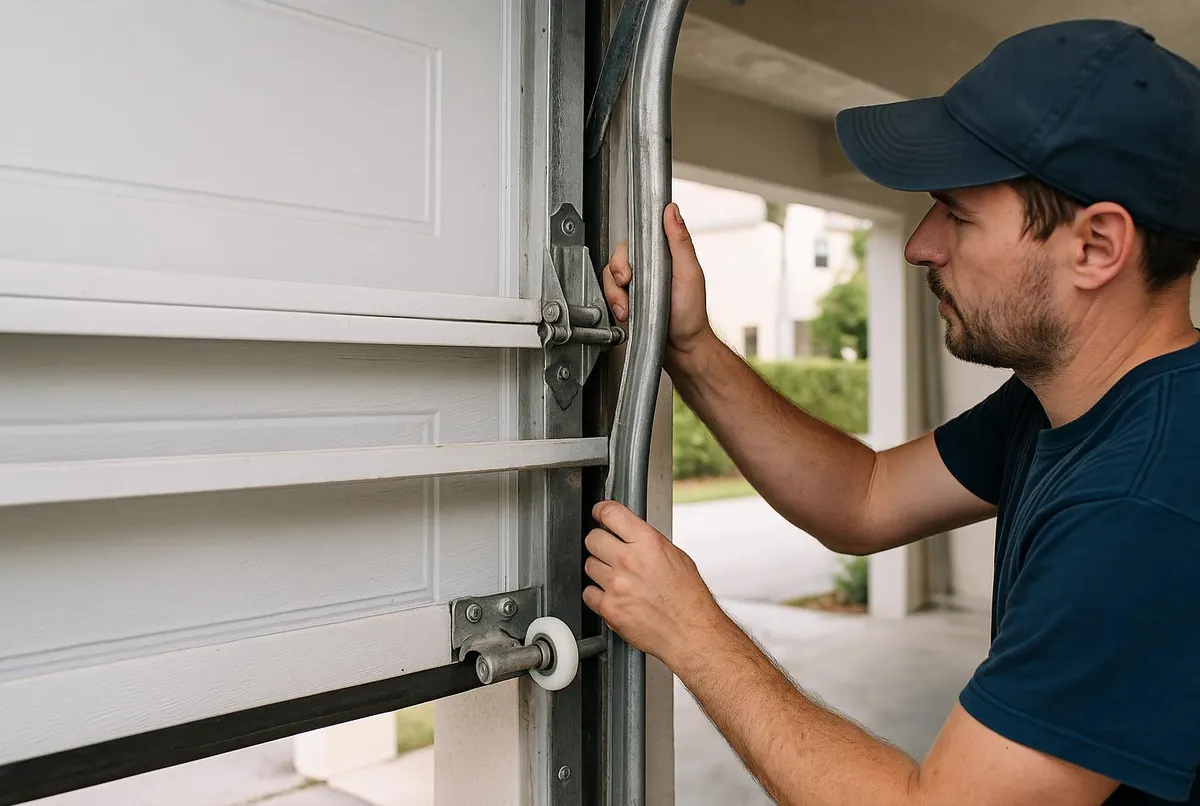
The Moment You Know It's Time
It usually starts small. The door groans going up, hesitates halfway, then lurches the rest of the way closed. You notice a bottom panel has gone soft and swollen along the edge, or a seam near the hardware has started weeping rust streaks down the steel. Maybe the door still works, but it's visibly out of square, or the remote control has to be pressed three times before anything happens. You stand there in the garage, keys in hand, and think: this thing is done.
Before you call anyone, it helps to know what a replacement door actually costs installed, what moves that number up or down, and which features actually matter for a home in a hot, humid, storm-exposed part of Florida.
Typical Installed Price Ranges
These are national ranges for a single-car garage door, fully installed, including standard hardware. Treat them as a starting point for budgeting, not a quote — your exact cost depends on size, material, and the factors below.
- Basic non-insulated steel door: roughly $700–$1,500 installed. Single layer steel, minimal insulation, standard hardware.
- Insulated steel door (two- or three-layer): roughly $1,200–$2,800 installed. Better R-value, quieter operation, more resistance to denting and flexing in heat.
- Wood composite or faux-wood steel: roughly $1,800–$3,500 installed. Steel core with a wood-look overlay — better moisture resistance than real wood.
- Custom carriage-style door (steel or composite): roughly $2,500–$5,500+ installed. Decorative hardware, carriage house panel design, often insulated.
- Solid wood or premium custom carriage doors: roughly $3,500–$10,000+ installed. Real wood is striking but needs the most upkeep in humid climates.
Double-wide doors typically run higher than these single-door ranges, sometimes close to double, since they use more material and often need heavier-duty springs and track hardware.
What Actually Moves the Price
Material
Steel is the most common choice and the easiest to maintain in a humid, salt-air environment — it resists swelling and warping better than wood. Wood composite splits the difference, giving a wood look with steel's durability. Solid wood looks great but is more prone to swelling, cracking, and rust at the hardware points when it's exposed to repeated humidity and afternoon downpours.
Insulation
An insulated door keeps the garage more stable in temperature, which matters if the garage is attached to living space or houses a workshop, gym, or extra fridge. Insulated doors also tend to be stiffer and quieter, and they resist minor denting better than single-layer steel.
Wind-Load Rating
In hurricane-prone parts of South Florida, wind-load rated doors are common and often expected by insurers and inspectors. These doors use reinforced tracks, heavier-gauge steel, and stronger bracing to resist pressure during storms. Wind-load rated models generally cost more than standard doors of the same style, but they're a reasonable trade-off against hurricane-season risk.
Windows, Hardware, and Finish
Decorative windows, faux hinges, handles, and custom paint or faux-wood finishes all add cost. Carriage-style doors carry most of this decorative hardware, which is part of why they sit higher in the price range.
Size and Opening Condition
A double-wide door costs more than a single. If the existing track, frame, or opening is out of square or damaged, the installer may need to do extra prep work before the new door goes in, which adds labor.
Opener Compatibility
If your current opener is old, heavy-duty wind-load rated doors or insulated doors may be too heavy for it to lift safely. Factor in the cost of a new opener if yours isn't rated for the door you're choosing.
Repair or Replace?
Not every rough-sounding door needs full replacement. A door that's otherwise sound but has one damaged panel, a broken spring, frayed cable, or has jumped off track can often be repaired for a fraction of a new door's cost. Replacement makes more sense when:
- Multiple panels are rusted, dented, or swollen from moisture exposure
- The door is visibly out of square and repairs haven't held
- You want a wind-load rated door and the current one isn't rated
- The door is old enough that replacement parts are hard to find
If you're not sure which category your door falls into, a quick inspection can usually settle it before you spend money either way.
When to Call Pinecrest Garage Door Pro
If your door is swollen, rusted, sagging, or just doesn't look or sound right anymore, it's worth having it looked at before deciding between repair and full replacement. We offer Garage Door Panel Replacement for doors that are structurally sound but cosmetically or functionally damaged in a few spots — often a cheaper fix than a full door swap. For doors that are further gone, or homeowners planning ahead of hurricane season, we also handle full installations with wind-load rated options suited to South Florida conditions. And if your door is simply older and due for a checkup, our Preventive Maintenance & Tune-Up service catches rust, track misalignment, and worn hardware before they turn into a bigger repair bill.
If you're seeing the warning signs in your own garage right now, call Pinecrest Garage Door Pro. We serve Pinecrest, Palmetto Bay, Kendall, South Miami, Coral Gables, Cutler Bay, The Crossings, and Dadeland, and we'll give you a straight answer on repair versus replacement before you spend a dollar.