
The Rule of Thumb
If your garage door feels frozen to the slab or suddenly sluggish in Pinecrest, it's never actually ice — it's humidity, rust, or debris mimicking that stuck feeling. South Florida doesn't get cold enough for literal freezing, but the symptoms homeowners describe up north show up here for different reasons. The exceptions are rare: a window AC unit dripping condensation onto the track overnight, or an unusually cool, damp morning after a cold front where overnight moisture settles into the weatherstripping and gums up old, thickened lubricant just long enough to make the door feel heavy on the first lift of the day.
Symptoms Homeowners Report
- The door feels unusually heavy when lifting manually, even though it opened fine the week before
- The opener strains, hums, or reverses partway up
- A grinding or scraping noise comes from one side as the door moves
- The door binds or tilts, moving faster on one side than the other
- The bottom panel seems glued to the concrete slab and needs a firm tug to break free
What a Technician Checks, In Order
1. The Bottom Seal and Slab Contact
This is the first and most common culprit. The rubber weatherstripping along the bottom of the door can bond lightly to a damp concrete slab, especially after Pinecrest's afternoon downpours leave standing moisture at the threshold. The fix is straightforward: peel the seal free, inspect it for cracking or flattening, and replace it if it's lost its shape. A fresh bead of silicone-based lubricant on the seal's contact edge, plus clearing any blocked drainage along the slab, usually solves this permanently.
2. Track Alignment and Debris
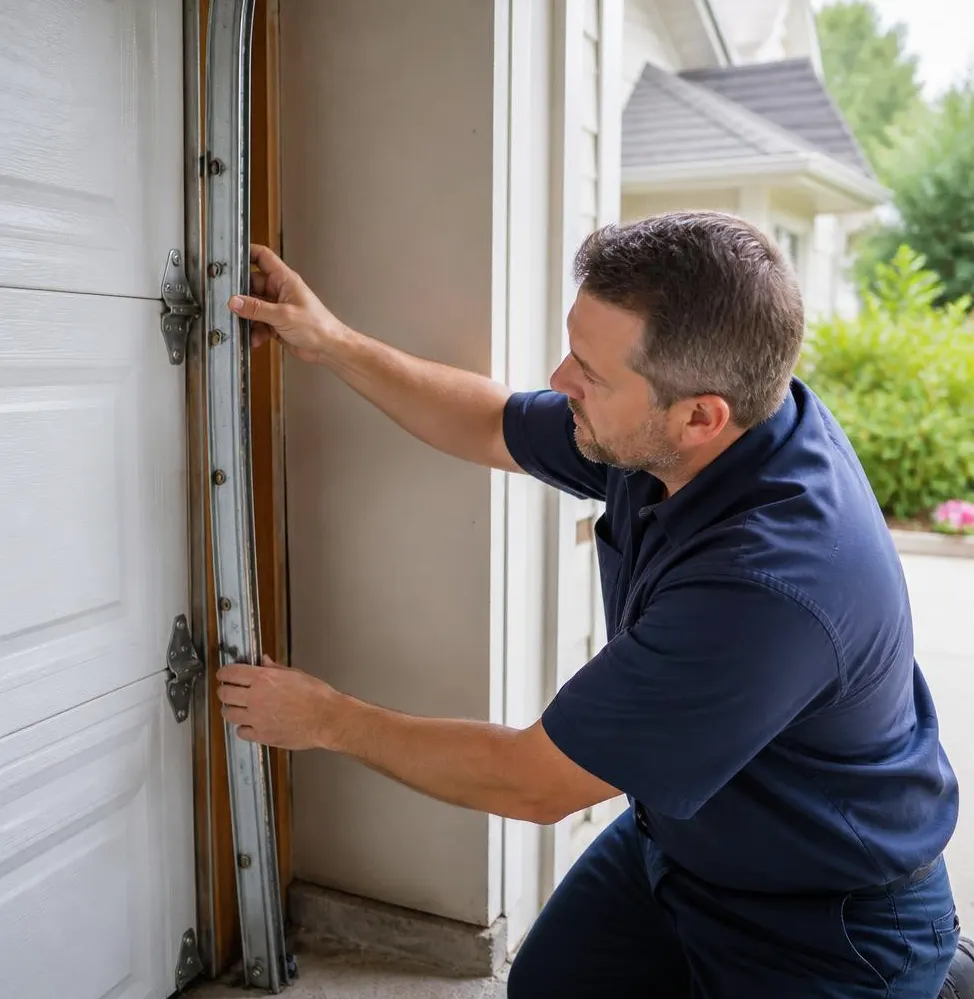
Storm season leaves grit, leaf debris, and sand in the tracks, which can cause binding that feels like the door is stuck rather than simply obstructed. A technician checks the tracks for dents, bends, or buildup, cleans them out, and realigns brackets if needed. Rollers get lubricated with a garage-door-specific lubricant — never WD-40, which attracts dust and grime in this climate rather than repelling it.
3. Rust on Rollers, Hinges, and Springs
Salt air near the coast and constant humidity corrode exposed metal faster than most homeowners expect. Rusted rollers bind inside the track, and a corroded spring can lose tension unevenly, making the door feel heavier on one side. Light surface rust gets sanded and treated; heavier corrosion usually means replacing the roller or hinge outright. Spring replacement is not a DIY job — these components hold significant tension and can cause serious injury if handled without the right tools.
4. Panel Swelling (Especially on Wood or Composite Doors)
If the door is wood or a wood-composite material, humidity swings cause the panels to absorb moisture and swell, pressing tightly against the frame or tracks. This shows up as binding that's worse on humid days and slightly better when the air dries out. The fix ranges from trimming and resealing the panel edges to, in older doors, recommending a switch to steel or insulated composite panels that hold up better against South Florida's moisture cycles.
5. Opener Sensor and Limit Switch Corrosion
Moisture can creep into opener wiring and sensor contacts over time, causing the motor to misread resistance and strain or stop partway through a cycle. A technician tests the force settings and limit switches, cleans corroded contacts, and recalibrates the travel limits so the opener isn't fighting the door unnecessarily.
6. Cable Wear and Fraying
Last on the checklist because it's less common, but cables exposed to salt air and moisture can fray or rust at the drum, causing uneven lifting that feels like one side is stuck. Frayed cables are a safety issue and get replaced immediately rather than patched.
Seasonal Timing Matters
Late fall into winter in Pinecrest still brings humidity swings and the tail end of storm season, so this is a good window to catch small binding issues before they turn into a stuck spring or a strained opener motor. Garage doors here work hardest during hurricane season's wind-load stress, so any sluggishness noticed now is worth addressing before the next heavy rain cycle finds the weak point.
When to Call Pinecrest Garage Door Pro
If the door still binds after you've checked the bottom seal and cleared visible debris, or if you hear grinding, see rust on the springs, or the opener keeps reversing, it's time to call in a technician. Pinecrest Garage Door Pro handles everything from Garage Door Cable Repair to a full Preventive Maintenance & Tune-Up that lubricates, realigns, and rust-proofs the system before small issues turn into a weekend without a working garage door.
Give us a call today — Pinecrest Garage Door Pro is ready to get your door moving smoothly again, fast.